Mastering 3D Blocking for Environments in Blender and Photoshop: A Streamlined Workflow for Modern Creators
In the rapidly evolving landscape of digital content creation, speed, efficiency, and visual fidelity are no longer just desirable traits—they are industry standards. Whether you are a freelance concept artist, a marketing agency crafting immersive brand experiences, or an entrepreneur looking to visualize product environments, the traditional pipeline from sketch to final render can often feel bottlenecked by technical complexity. This is where 3D Blocking for Environments in Blender and Photoshop emerges not merely as a technique, but as a strategic workflow solution. By combining the geometric precision of Blender with the compositional flexibility of Photoshop, creators can bridge the gap between abstract ideas and tangible, high-impact visuals with unprecedented agility.
The Strategic Value of Early Visualization
To understand why this specific workflow is gaining traction among professionals and enthusiasts alike, one must first recognize the shift in creative expectations. Stakeholders, clients, and consumers demand rapid iteration. The era of spending weeks on high-fidelity renders before receiving feedback is largely over. Instead, there is a growing preference for "blockout" phases that allow teams to validate composition, lighting, and spatial relationships early in the process.
3D Blocking for Environments in Blender and Photoshop addresses this need directly. It allows artists to translate rough 2D sketches into three-dimensional space using basic primitives, establishing the foundational geometry of a scene without getting bogged down in details. This method serves as a critical checkpoint in the creative pipeline, ensuring that the narrative and visual intent are solidified before significant resources are invested in modeling intricate assets or rendering final images. For marketers and entrepreneurs, this means faster time-to-market for visual campaigns and reduced risk of costly revisions later in the production cycle.
Deconstructing the Workflow: From Sketch to Scene
The core of this methodology lies in its simplicity and accessibility. As demonstrated by industry practitioners like Jose, the process begins with a simple yet powerful premise: transforming a flat sketch into a navigable 3D environment using only fundamental shapes. This approach democratizes 3D art, making it accessible to those who may not be experts in complex polygonal modeling but possess a strong sense of design and composition.
Step 1: Establishing the Foundation in Blender
The journey starts in Blender, a powerhouse open-source software that has become ubiquitous in both professional studios and independent creator workflows. The first step involves importing or referencing a 2D sketch—whether it is a hand-drawn concept, a digital painting, or a mood board image. Using this sketch as a guide, the artist employs basic and primitive shapes such as cubes, cylinders, spheres, and planes to construct the scene.
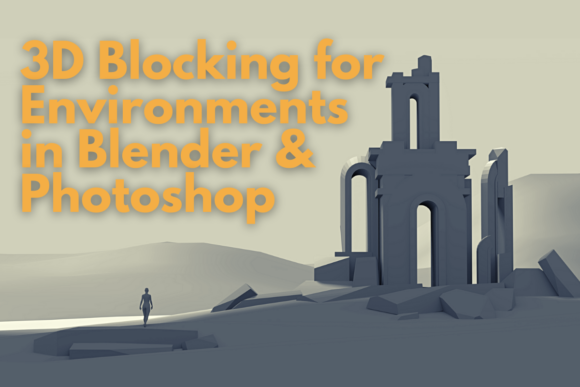
This phase is not about creating recognizable objects; it is about defining volume, scale, and perspective. By manipulating these primitives, the artist creates a "graybox" or blockout version of the environment. This stage is crucial for several reasons:
- Spatial Accuracy: It ensures that the camera angles and focal points align with the original artistic vision.
- Pacing and Flow: It allows the creator to walk through the scene virtually, identifying potential issues with layout or readability.
- Efficiency: It drastically reduces the time spent on unnecessary detailing that might ultimately be discarded during client feedback loops.
By focusing on these structural elements, the artist builds a robust framework that supports the rest of the production pipeline. This method emphasizes that good design is rooted in solid geometry and thoughtful placement, rather than surface-level aesthetics.
Step 2: Lighting and Rendering Preparation
Once the blocking phase is complete, the focus shifts to lighting. In 3D Blocking for Environments in Blender and Photoshop, lighting is not treated as a post-production afterthought but as an integral part of the blockout process. Proper lighting defines the mood, directs the viewer’s eye, and adds depth to the otherwise flat-looking primitives.
Jose’s approach highlights the importance of setting up realistic or stylized light sources that mimic real-world physics or adhere to specific artistic directions. This includes positioning key lights, fill lights, and rim lights to sculpt the forms created by the primitives. The goal here is to produce a render that, while still composed of basic shapes, conveys a clear emotional tone and atmospheric quality. This rendered image serves as the bridge between the 3D software and the 2D compositing stage, providing a textured base layer that retains the structural integrity of the 3D model while offering the aesthetic polish needed for presentation.
Step 3: Enhancing Composition in Photoshop
The final stage of this integrated workflow takes place in Adobe Photoshop, a tool familiar to almost every digital creator. Here, the raw render from Blender is imported and enhanced. This is where the magic of compositing occurs. Artists can adjust color grading, add atmospheric effects like fog or dust particles, and refine edges to create a more cohesive image.
Photoshop allows for non-destructive editing, meaning that changes can be made easily without altering the underlying 3D data. This flexibility is particularly valuable for freelancers and agencies working under tight deadlines. If a client requests a change in the time of day or the intensity of the lighting, the artist can return to Blender, adjust the lights, re-render the blockout, and seamlessly integrate the new pass into the Photoshop file. This iterative capability underscores the synergy between the two tools, creating a feedback loop that accelerates the creative process.
Why This Matters in Today’s Creative Economy
The adoption of 3D Blocking for Environments in Blender and Photoshop reflects broader trends in the technology and lifestyle sectors. As virtual reality (VR), augmented reality (AR), and metaverse platforms continue to expand, the demand for 3D environments is skyrocketing. However, the barrier to entry remains high for many due to the steep learning curves associated with complex 3D modeling software.
This streamlined workflow lowers that barrier. By emphasizing primitives and basic operations, it allows creators to focus on design principles rather than technical minutiae. Furthermore, it aligns with the modern consumer’s expectation for personalized and immersive content. Brands are increasingly leveraging 3D visuals to tell stories that resonate on a deeper emotional level, and the ability to quickly prototype and iterate on these visuals is a competitive advantage.
For entrepreneurs and marketers, this workflow offers a cost-effective way to produce high-quality visual assets. Instead of hiring large teams of specialized 3D artists for every project, small businesses can leverage generalist skills combined with efficient tools to achieve professional results. This democratization of 3D content creation empowers smaller entities to compete visually with larger corporations, fostering a more diverse and dynamic digital marketplace.
Practical Applications and Future Outlook
The applications of this technique are vast. Game developers use blockouts to plan level design and gameplay flow. Architects utilize similar methods to present preliminary designs to clients. Interior designers employ these workflows to showcase potential renovations before any physical work begins. Even social media influencers are beginning to adopt these techniques to create unique, eye-catching backgrounds for their videos and posts.
Looking ahead, the integration of AI tools into Blender and Photoshop will further enhance this workflow. Imagine generating initial blockout suggestions based on text prompts or automatically optimizing lighting setups based on reference images. While speculation should be handled with caution, the trajectory is clear: the future of 3D creation lies in hybrid workflows that combine human creativity with machine efficiency.
However, regardless of technological advancements, the fundamental principles of 3D Blocking for Environments in Blender and Photoshop will remain relevant. The ability to think in three dimensions, to understand light and shadow, and to compose compelling narratives within a virtual space is a skill set that transcends specific software versions. It is a testament to the enduring value of foundational artistic knowledge applied through modern, accessible tools.
Conclusion
In conclusion, mastering 3D Blocking for Environments in Blender and Photoshop is more than just learning a new set of buttons or shortcuts; it is about adopting a mindset of efficiency, clarity, and adaptability. By starting with simple sketches and primitive shapes, building them into structured 3D scenes, and refining them through strategic lighting and compositing, creators can unlock new levels of productivity and creative expression.
For professionals, entrepreneurs, and enthusiasts, this workflow represents a practical path forward in a world that demands both speed and quality. It bridges the gap between imagination and reality, allowing ideas to take shape with minimal friction. As the digital landscape continues to evolve, those who embrace these streamlined, hybrid approaches will be best positioned to lead the charge in visual storytelling and environmental design.