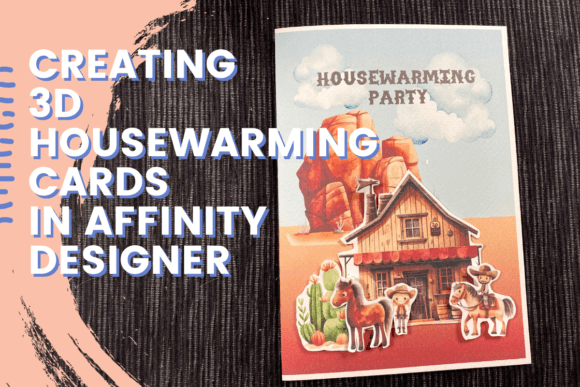
Creating 3D Housewarming Cards in Affinity Designer
The transition from a digital file to a tangible, three-dimensional object represents a significant leap in creative strategy. Creating 3D Housewarming Cards in Affinity Designer is not merely an exercise in graphic design; it is a deliberate act of physical communication that bridges the gap between screen-based efficiency and human connection. For professionals, entrepreneurs, and creators who understand the value of distinct branding and thoughtful engagement, mastering this workflow offers a unique advantage in how they present ideas, celebrate milestones, or mark new beginnings.
While the prompt often references Halloween themes, the underlying methodology applies universally. The process involves searching for and installing specific fonts on an iPad, establishing a document structure within Affinity Designer, and then executing a hybrid workflow that combines digital precision with manual assembly. This approach transforms a standard greeting into a memorable artifact, elevating the perceived value of the message being sent.
The Strategic Value of Physical Artifacts
In an era dominated by instant messaging and fleeting social media interactions, the decision to create a physical, 3D object stands out as a high-impact strategic move. When you engage in Creating 3D Housewarming Cards in Affinity Designer, you are prioritizing long-term retention over immediate consumption. A flat image is easily scrolled past; a layered card with depth requires interaction. It demands time, attention, and a moment of pause from the recipient.
For small business owners and freelancers, this technique serves as a powerful tool for customer experience management. Sending a hand-assembled card signals that the sender has invested resources beyond the monetary cost of materials. It demonstrates a commitment to quality and detail that mirrors the service or product offered. In marketing terms, this creates a "halo effect," where the craftsmanship of the card influences the perception of the brand's reliability and care.
Furthermore, this process supports operational planning by encouraging a structured approach to creativity. Unlike spontaneous digital posts, a 3D card project requires foresight. You must consider dimensions, material limitations, and assembly logic before the first vector shape is drawn. This pre-planning phase forces a clarity of thought that can be applied to broader business operations, ensuring that every creative output aligns with a specific goal.
Planning the Workflow: From Concept to Cut
The success of any project involving Creating 3D Housewarming Cards in Affinity Designer hinges on the initial planning stages. The workflow begins not with drawing, but with research and resource acquisition. On an iPad, the first step is identifying and installing the right font. Typography sets the tone; a playful script may suit a casual gathering, while a bold sans-serif might better reflect a professional milestone. Selecting a font that is legible at various scales and compatible with print resolution is critical.
Once the typography is secured, the focus shifts to document setup. Creating the base document in Affinity Designer requires more than just setting canvas dimensions. You must account for the bleed areas necessary for cutting and the spacing required for the 3D elements to function without collision. This stage is where many creators falter, assuming that what looks good on the screen will translate perfectly to paper. Strategic planning dictates that you simulate the final assembly digitally before committing to the printer.
- Define the Layers: Clearly separate background elements, text, and pop-up mechanisms in your layers panel.
- Material Selection: Decide on paper weight early. Thicker cardstock holds 3D structures better but requires precise scoring.
- Assembly Logic: Map out how the cut-out elements will fold or stack to achieve the desired depth.
This methodical approach ensures that the final product is not only visually striking but structurally sound. It reduces waste and prevents the frustration of failed assemblies, saving both time and money in the long run.
Execution and the Hybrid Production Model
The core of Creating 3D Housewarming Cards in Affinity Designer lies in its hybrid nature. You leverage the precision of vector software to generate clean lines and perfect shapes, then transition to a manual process to bring them to life. After printing, the user cuts out the specific elements needed. This manual intervention is where the magic happens. It allows for customization that automation cannot replicate.
Consider the scenario of a real estate agent sending a housewarming gift to a client. By using this method, they can include a miniature 3D model of the property or a stylized representation of the home's architecture. The act of cutting and assembling these elements adds a layer of personal touch that a generic digital render cannot match. It turns a transactional relationship into a relational one.
For educators and hobbyists, this workflow serves as an excellent teaching tool. It breaks down complex design concepts into manageable steps: type selection, layout composition, print preparation, and physical construction. It teaches patience and problem-solving, as the creator must troubleshoot issues like alignment errors or structural weakness during the cutting phase. These soft skills are transferable to other areas of professional and personal development.
Risks and Considerations in Design Strategy
While the results can be impressive, relying on Creating 3D Housewarming Cards in Affinity Designer without clear goals introduces significant risks. One common pitfall is over-engineering the design. If the 3D elements are too complex or require intricate folding, the likelihood of failure increases dramatically. A card that falls apart in transit fails its primary purpose: communication. Therefore, simplicity should always be weighed against complexity.
Another risk is underestimating the cost and time investment. While digital tools are efficient, the physical production phase—printing, cutting, gluing, and assembling—is labor-intensive. For large-scale campaigns, this method may not be scalable unless automated machinery is available. Decision-makers must evaluate whether the emotional impact of the card justifies the hours spent on production. If the goal is mass distribution, a high-quality digital alternative might be more appropriate.
Additionally, there is the risk of misalignment between the digital preview and the physical reality. Colors may shift during printing, and paper textures can alter the appearance of the design. To mitigate this, always print test proofs and assemble a sample before producing the full batch. Ignoring these practical constraints can lead to disappointing outcomes that undermine the intended message.
Intentional Use for Long-Term Results
To truly benefit from this technique, it must be used intentionally rather than randomly. Every element added to the card should serve a purpose. Is the 3D aspect enhancing the narrative? Does the chosen font reinforce the brand identity? Are the colors consistent with the overall visual strategy? Answering these questions ensures that the effort put into Creating 3D Housewarming Cards in Affinity Designer yields tangible returns.
When approached strategically, this workflow becomes a cornerstone of a personalized communication plan. It allows creators to control the narrative completely, from the initial concept to the final tactile experience. Whether used to celebrate a new home, launch a product, or thank a partner, the resulting card acts as a lasting reminder of the relationship. In a world of disposable content, a well-crafted 3D card endures, serving as a testament to the creator's dedication and skill.
Ultimately, the value of this project extends beyond the card itself. It cultivates a mindset of intentional creation, where every decision is made with the end result in mind. By mastering the interplay between digital design and physical assembly, professionals can elevate their work, foster deeper connections, and achieve better results in their communications. The process of making something real, with hands-on involvement, remains one of the most effective ways to leave a lasting impression.