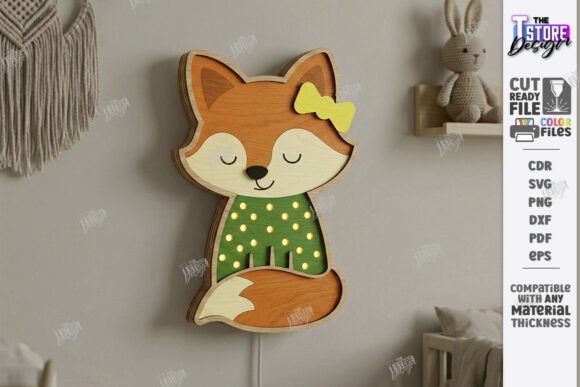
The Art of Illumination: Integrating Kids Night Light Laser Cut 3D Animal Designs into Modern Nursery Aesthetics
The transition from a brightly lit playroom to a dimly lit, serene sleeping environment is often the most challenging part of a child’s evening routine. For parents and caregivers, finding the perfect balance between providing enough light for safety and maintaining an atmosphere conducive to sleep is a constant negotiation. This is where the intersection of traditional craftsmanship and modern digital fabrication meets interior design. Specifically, the trend toward Kids Night Light Laser Cut 3D Animal designs has transformed how we approach nursery decor, moving beyond simple plastic gadgets to create personalized, artistic, and functional lighting solutions.
This article explores the multifaceted world of laser-cut wooden and layered paper nightlights. We will examine the technical specifications of these digital assets, the aesthetic benefits they bring to a child’s room, and the practical considerations for creators and parents alike. Whether you are a woodworker looking to expand your product line, a parent seeking a unique gift, or an educator interested in STEM applications, understanding the nuances of 3D shadow box lamps is essential.
The Evolution of Digital Craft in Home Decor
Gone are the days when custom home decor required expensive tooling or extensive manual labor. The advent of accessible software and affordable cutting machines, such as the Glowforge, Cricut, and Silhouette, has democratized manufacturing. At the heart of this revolution are vector files—digital blueprints that guide cutting and engraving machines with precision. The specific design elements found in Kids Night Light Laser Cut 3D Animal collections represent a sophisticated application of these technologies.
These designs are not merely flat images; they are complex layering systems. By utilizing depth, creators can produce shadows and highlights that give the illusion of movement and dimension. When illuminated from behind or within, a flat SVG file transforms into a glowing narrative scene. This capability allows for the creation of whimsical forest scenes, safari adventures, or underwater worlds that serve as both a comforting nightlight and a piece of wall art. The shift from mass-produced, generic lighting to personalized, story-driven illumination reflects a broader consumer desire for authenticity and emotional connection in home environments.
Understanding the Technical Specifications
For those looking to implement these designs, understanding the file formats is crucial. A high-quality digital product package for a 3D animal nightlight typically includes a variety of formats to ensure compatibility across different hardware and software ecosystems. The standard inclusion of multiple file types ensures that whether you are using a professional-grade CO2 laser cutter or a desktop vinyl cutter, the design remains viable.
- SVG (Scalable Vector Graphics): This is the industry standard for laser cutters and plotter machines. SVG files contain mathematical data defining lines and curves, allowing them to be scaled to any size without losing resolution. In the context of a Kids Night Light Laser Cut 3D Animal project, the SVG file dictates the precise paths for the red lines, which indicate where the machine should cut through the material entirely.
- EPS (Encapsulated PostScript): Often used in graphic design software like Adobe Illustrator, EPS files are another robust vector format. They are particularly useful if the creator plans to edit the design further before sending it to the cutting machine.
- PNG (Portable Network Graphics): While raster-based, high-resolution PNG files are invaluable for visualization and testing. They allow users to see how the final layers will look relative to one another before committing to physical materials. These files often include transparency settings, which help in aligning the layers during the assembly process.
- PDF (Portable Document Format): PDFs serve as excellent reference documents. They can include print-ready instructions, layer guides, and scale references. For educators or hobbyists who may not have advanced CAD skills, the PDF acts as a comprehensive manual for assembling the 3D structure.
- DXF (Drawing Exchange Format): Widely supported by various engineering and design software, DXF files provide another vector option, ensuring broad compatibility with older or specialized cutting machine software.
A critical aspect of these files is the color-coding convention. Typically, red lines signify cut paths, while black lines denote engrave paths. Engraving adds texture and depth, creating subtle shadows that enhance the three-dimensional effect when the light is on. It is imperative that the user’s software correctly interprets these colors; otherwise, the machine may attempt to cut where it should only engrave, ruining the structural integrity of the piece.
Aesthetic and Psychological Benefits
The choice of subject matter—animals—is not arbitrary. Animals hold a universal appeal for children, serving as early educational tools and sources of comfort. A Kids Night Light Laser Cut 3D Animal Shadow Box Lamp does more than just emit light; it tells a story. A lion might represent bravery, an owl wisdom, and a rabbit gentleness. These symbolic associations can be leveraged to create a calming bedtime ritual.
From a psychological perspective, soft, warm lighting helps regulate melatonin production, signaling to the brain that it is time to sleep. Unlike harsh overhead lights, the diffused glow emanating from a layered wooden lamp creates a cozy nook. The natural grain of wood adds warmth and organic texture to the room, contrasting with the sterile feel of many electronic devices. Furthermore, the "shadow" aspect of the design provides visual interest without overstimulation. As the light shifts slightly throughout the night, the shadows move subtly, mimicking the natural passage of time and helping children orient themselves in their space.
Practical Applications and Use Cases
The versatility of these digital designs allows for a wide range of applications beyond the standard nursery nightlight.
Personalized Gifts and Merchandise
For small business owners and Etsy sellers, offering customizable options is a significant competitive advantage. By purchasing the base vector files, creators can add names, dates, or specific color schemes to the animal designs. A "Baby Liam’s Safari Adventure" lamp becomes a cherished keepsake rather than a disposable commodity. The ability to offer personalization increases the perceived value of the product, allowing for higher price points in the handmade market.
Educational Tools
In classrooms or homeschooling environments, these projects can serve as interdisciplinary learning tools. Science teachers can discuss the habitats of the animals depicted. Math teachers can use the layering process to teach concepts of volume, area, and geometric shapes. Technology classes can focus on the operation of laser cutters and the principles of vector graphics. The tangible result of the project reinforces the learning objectives, making abstract concepts concrete.
Therapeutic Environments
Hospitals, pediatric wards, and therapy centers often struggle to create welcoming environments for young patients. Custom Kids Night Light Laser Cut 3D Animal lamps can be designed to match therapeutic themes, reducing anxiety and fear associated with medical settings. The gentle glow provides a sense of security, while the familiar animal imagery offers comfort and distraction during difficult procedures or recovery periods.
Material Considerations and Safety
When constructing these lamps, material selection is paramount. Wood is the preferred medium due to its durability and aesthetic appeal. Plywood, basswood, and MDF (Medium Density Fiberboard) are common choices. Basswood, in particular, is favored for its fine grain and ease of cutting, allowing for intricate details in the animal features. However, it is essential to ensure that the wood is sanded smooth to prevent splinters, especially in a child’s room.
Alternatively, thick cardstock or foam board can be used for temporary displays or lower-budget projects. While these materials are easier to cut manually, they lack the longevity and premium feel of wood. Regardless of the material, flame retardancy should be considered. Since these lamps involve electrical components, using non-flammable adhesives and ensuring proper ventilation around the LED source is critical.
The LED component itself plays a significant role in the final effect. Warm white LEDs (around 2700K to 3000K) are ideal for creating a soothing ambiance. Cool white LEDs can appear too clinical and harsh for a nursery setting. Battery-operated puck lights or USB-powered LED strips are commonly used because they generate minimal heat and do not require complex wiring, enhancing safety for children.
Implementation Workflow for Creators
Successfully bringing a Kids Night Light Laser Cut 3D Animal design to life requires a systematic workflow. First, the digital files must be imported into the cutting software. Here, the designer checks the layer order, ensuring that the background layers are cut first, followed by mid-ground elements, and finally the foreground details. Scaling is done at this stage to fit the desired frame or shadow box dimensions.
Once the cutting is complete, the pieces must be cleaned of dust and debris. Sanding edges lightly helps with assembly. The next step is assembly, which often involves gluing the layers together in a specific sequence. Spacers, made from small squares of cardboard or wood, are placed between layers to create the 3D depth. This spacing is what allows the light to pass through the gaps, creating the characteristic shadow effect.
Finally, the assembly is placed into the shadow box frame. The LED unit is secured behind the rearmost layer, and the back panel is closed. Testing the light ensures even distribution and checks for any hot spots. With careful execution, the result is a stunning piece of functional art that combines technology, design, and craftsmanship.
Conclusion
The rise of Kids Night Light Laser Cut 3D Animal designs represents a convergence of digital innovation and traditional craft. By leveraging vector files and laser cutting technology, creators can produce high-quality, personalized lighting solutions that enhance the emotional and aesthetic quality of a child’s space. These lamps are more than just sources of light; they are storytelling devices, educational tools, and beautiful works of art. As the demand for customized, meaningful home goods continues to grow, understanding the technical and creative aspects of these products will remain valuable for professionals, hobbyists, and parents alike. The key lies in respecting the precision of the digital files while embracing the warmth and personality of the physical materials.