Table Lamp - 3d Papercraft
In the landscape of digital creative assets, few items bridge the gap between virtual design and tangible reality as effectively as papercraft models. Among these, the Table Lamp - 3d Papercraft stands out as a compelling project for individuals seeking to blend functional decor with hands-on creation. This is not merely a toy or a simple children’s activity; it is a structured design asset intended for adults who appreciate precision, aesthetic detail, and the satisfaction of building something from raw materials. For professionals in design, marketing, and content creation, understanding the value proposition of such digital files is crucial, as they represent a low-cost, high-impact way to produce unique physical goods or promotional items.
The Nature of the Digital Asset
At its core, this product is a collection of digital templates designed to be printed and assembled into a three-dimensional table lamp. Unlike ready-made furniture that requires shipping logistics and incurs significant carbon footprints, this model exists entirely in the digital realm until the moment of creation. The package includes multiple file formats—PDF, DXF, EPS, PNG, and JPG—ensuring compatibility across various software environments and printing methods. This versatility is a significant strength, allowing users to choose their preferred workflow, whether that involves standard home office printers or professional-grade cutting machines like Cricut or Silhouette.
The inclusion of vector formats (DXF, EPS) alongside raster images (PNG, JPG) and print-ready documents (PDF) caters to different levels of technical expertise. A graphic designer might prefer the EPS file to adjust scale or modify colors before export, while a hobbyist might simply download the PDF to print immediately. This flexibility reduces friction in the user experience, making the asset accessible to a broader audience without compromising on quality.
Assembly Process and Time Investment
One of the most critical factors in evaluating any DIY kit is the time commitment required. The estimated assembling time for this Table Lamp - 3d Papercraft is between 2 to 3 hours. This duration is realistic and reflects the complexity of the design. It is not a five-minute craft but rather a substantial project that demands focus and patience. For many adults, particularly those in creative fields, this time investment is viewed positively as a form of mindful engagement—a break from screens and digital workflows to engage in tactile problem-solving.
The assembly process follows a logical sequence: print, cut, score, bend, and glue. Each step requires specific tools, which are listed clearly in the product description. Users will need a colored printer to bring the design to life, scissors or a craft knife for precision cutting, and a bone folder or non-working ballpoint pen for scoring the paper folds. Scoring is perhaps the most technically demanding aspect; it ensures clean, crisp edges when the flat pieces are folded into three dimensions. Without proper scoring, the final structure may appear warped or uneven, detracting from the overall aesthetic.
Required Materials and Setup
To successfully complete the Table Lamp - 3d Papercraft, certain prerequisites must be met. The most important material is A4 Letter cardstock paper. Standard printer paper is too thin to hold the structural integrity of a lamp, especially once the internal lighting component is added. Cardstock provides the necessary rigidity and durability. Additionally, a strong adhesive is required to bond the flaps securely. While white glue works, quick-drying options can speed up the process.
- Colored Printer: Essential for achieving the intended visual effect. Black-and-white printing will result in a loss of detail and depth.
- Cutting Tools: Sharp scissors for general cuts and a craft knife for intricate details.
- Scoring Tool: A bone folder is ideal, but a dull pen or ruler edge can suffice if used gently to avoid tearing the paper.
- Ruler: Necessary for ensuring straight lines during scoring and alignment.
These requirements are minimal and inexpensive, reinforcing the accessibility of the project. However, they also set expectations: this is not a "no-mess" activity. It requires a dedicated workspace and a willingness to engage with physical materials.
Final Dimensions and Practical Application
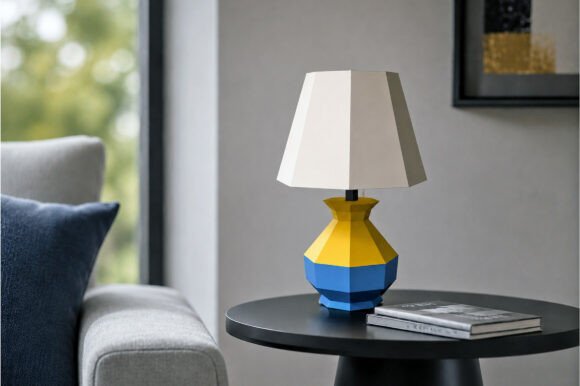
Once assembled, the Table Lamp - 3d Papercraft measures 30 x 20 x 20 cm. This size is significant because it determines where the lamp can be placed. At 30 centimeters tall, it is suitable for bedside tables, desk corners, or small side tables. It is not a floor lamp or a large overhead fixture, so its use case is intimate and localized. The 20-centimeter width and depth provide a stable base, assuming the assembly is done correctly.
The practical value of this lamp extends beyond illumination. Because it is made of paper, it serves as a decorative object that can be customized. Users can experiment with different colored cardstocks to match existing interior themes. For entrepreneurs or makers, this lamp represents a potential product line. By purchasing the digital files, one can produce multiple units, add custom lighting components, and sell them as handmade decor items. This transforms the asset from a personal hobby project into a potential business tool.
Quality, Consistency, and User Experience
Evaluating the quality of digital papercraft templates requires looking at the precision of the cuts and the clarity of the instructions. While the provided text does not include the actual templates, the format list suggests a professional approach. Vector files ensure that edges remain sharp regardless of scaling, which is crucial for fitting pieces together accurately. If the source files were low-resolution rasters only, users would face pixelation issues when printing, leading to misaligned joints.
The reliability of the final product depends heavily on the user’s adherence to instructions. Paper is a forgiving yet unforgiving medium; a slight misalignment during gluing can compound into a noticeable distortion in the final shape. Therefore, the effectiveness of this Table Lamp - 3d Papercraft is contingent upon the assembler’s skill level. Beginners may find the 2–3 hour timeline optimistic, while experienced crafters may complete it faster. The lack of explicit step-by-step photographic instructions in the brief description implies that the templates themselves contain the necessary guides, relying on the user’s ability to interpret diagrams.
Ideal Audience and Use Cases
This asset is best suited for adults aged 20–50 who have an interest in design, crafting, or sustainable living. It appeals to:
- Hobbyists and Makers: Individuals who enjoy weekend projects and deriving satisfaction from creating physical objects.
- Educators: Teachers looking for engaging STEM-related activities that combine geometry, engineering, and art.
- Small Business Owners: Those seeking low-inventory products to test market demand for handmade home decor.
- Remote Workers: Professionals seeking a personalized touch for their home office environment without the cost of bespoke furniture.
For marketers and bloggers, this item offers content opportunities. A tutorial video or blog post about assembling the lamp can drive traffic through SEO, leveraging keywords related to DIY home decor, papercraft tutorials, and budget-friendly lighting solutions.
Potential Limitations
No product is without drawbacks. The primary limitation of a paper-based lamp is durability. It is not suited for high-traffic areas where it might be bumped or knocked over. Moisture is another enemy; paper absorbs humidity, which can cause warping over time. Furthermore, the internal electrical component is not included. Users must source a compatible light bulb and wiring kit separately, adding another layer of complexity and safety consideration. Ensuring that the electrical setup is safe and insulated from the combustible paper material is paramount.
Conclusion
The Table Lamp - 3d Papercraft is a well-conceived digital asset that offers genuine value to those willing to invest the time and effort to assemble it. Its strength lies in its versatility, affordability, and the creative control it grants the user. By providing multiple file formats and clear material requirements, it lowers the barrier to entry while maintaining a standard of quality appropriate for adult creators. Whether used as a personal decoration, an educational tool, or a basis for a small business venture, this papercraft model demonstrates how digital resources can facilitate meaningful physical creation. For anyone looking to add a unique, handcrafted element to their space or portfolio, this lamp represents a practical and rewarding option.