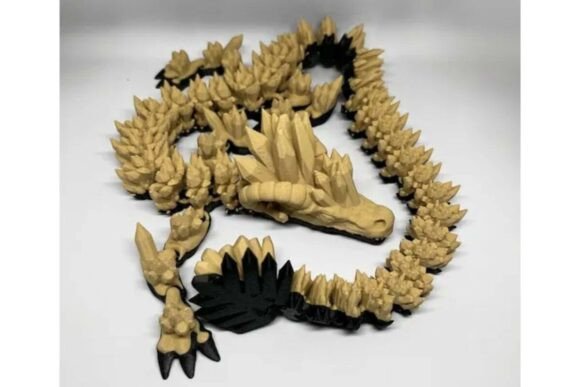
Thorn Dragon 3D Printed Fidget Toy
The intersection of functional design and artistic expression has given rise to a new category of desktop accessories: articulated 3D printed models. Among these, the Thorn Dragon 3D Printed Fidget Toy stands out as a prominent example of what modern additive manufacturing can achieve. This model is not merely a static statue; it is a complex assembly of interlocking parts designed for dynamic movement, tactile engagement, and visual impact. For hobbyists, designers, and collectors, understanding the specific characteristics, printing requirements, and user experience of this item is essential before committing print time and materials.
What Is the Thorn Dragon?
The Thorn Dragon is an intricately designed, fully flexible dragon model created specifically for 3D printing. Unlike traditional figurines that require glue or assembly after printing, this model utilizes a "print-in-place" mechanism. This means all moving joints are printed simultaneously in their final positions, eliminating the need for post-print assembly or support removal from internal cavities. The design features dozens of joints along its spine, limbs, and tail, allowing the entire body to twist, turn, and pose with a high degree of articulation.
A defining aesthetic feature is its two-tone color scheme. The model is designed to highlight sharp, crystal-like thorns running along its back. These thorns are intended to pop in contrasting colors against the main body, creating a striking visual effect that emphasizes the creature’s mythical nature. The result is a piece that functions effectively as both a stress-relief fidget toy and an eye-catching desk ornament for fantasy enthusiasts.
Key Features and Design Philosophy
When evaluating the Thorn Dragon, several technical and aesthetic elements distinguish it from standard models:
- Fully Articulated Structure: The "thorn spine" is not just decorative; it forms the core of the articulation system. Each segment allows for independent or linked movement, providing lifelike motion capabilities.
- Bold Dual-Color Design: The model leverages the capabilities of multicolor (or dual-extruder) printers to create maximum visual impact. The contrast between the body and the thorns is critical to the design’s success.
- Print-in-Place Construction: A significant advantage for users is the elimination of support structures. The geometry is engineered so that joints move freely without residual material interference, reducing post-processing time.
- Flexible Body and Tail: The flexibility extends beyond the joints to the overall structure, allowing for dynamic posing that mimics organic movement.
Printing Considerations and Technical Requirements
While the Thorn Dragon offers an impressive end result, it demands careful preparation and realistic expectations regarding print duration. The files are high-resolution, which directly impacts slicing time and total print hours. Users must be prepared for a process that prioritizes detail over speed.
Printer Settings and Configuration
To achieve the best results, specific printer settings are recommended by the creator, Mels 3D Labs. These settings are optimized to balance structural integrity with the smooth movement of joints:
- Infill: An infill density of 10–15% is sufficient, as the strength comes from the wall lines rather than internal density.
- Wall Lines: Using 2–3 wall lines ensures durability without adding unnecessary weight or material cost.
- No Supports: The model is explicitly support-free. Attempting to add supports may damage the delicate joint mechanisms during removal.
Layer Height and Print Time
The choice of layer height significantly affects the final quality and the time investment required:
- 0.2 mm Layer Height: This setting reduces print time to approximately 6 hours. It is suitable for users who want a quicker turnaround and do not mind slightly visible layer lines on the thorns.
- 0.12 mm Layer Height: For a smoother finish and finer detail resolution, the estimated print time increases to about 8 hours. This is recommended for those prioritizing the crispness of the dual-color contrast.
Scaling Constraints
One critical limitation to note is scaling. While the model can technically be scaled down, the mechanical tolerances of the joints are tight. Scaling below 70% of the original size risks jamming the joints due to the accumulation of tolerance errors. Conversely, scaling up beyond 100% may cause sagging or warping due to the increased weight of the filament. The recommended minimum scale is 85%, ensuring the articulation remains functional while allowing for slight size adjustments.
Evaluating the User Experience
The primary value proposition of the Thorn Dragon lies in its tactile feedback. As a fidget toy, it provides satisfying resistance and movement, making it effective for stress relief during work or study sessions. The act of posing the dragon allows for creative expression, turning a static object into a dynamic display piece.
However, users should consider the trade-offs. The high-resolution files mean longer slicing times on slower computers. Additionally, while the print is support-free, initial joint testing may be required. Some users find that a brief manual check or gentle manipulation helps ensure no microscopic imperfections hinder movement. If a joint is too tight, light sanding or adjusting slicer tolerances may be necessary.
Who Is This Model For?
The Thorn Dragon is a strong fit for specific groups of users:
- Multicolor Printer Owners: Those with dual-extrusion capabilities will appreciate the opportunity to showcase the two-tone design. The contrast is integral to the model’s aesthetic appeal.
- Desk Decor Enthusiasts: Individuals looking for unique, conversation-starting office accessories will find the mythical theme and dynamic posing options appealing.
- Advanced Hobbyists: Users comfortable with managing long print jobs and fine-tuning settings will get the most out of the 0.12 mm layer height option.
Alternatives and When to Look Elsewhere
While the Thorn Dragon is a compelling option, it may not be the right choice for everyone. Users with single-extruder printers may struggle to achieve the intended visual impact unless they plan to paint the model manually, which adds another layer of complexity and time. In such cases, a monochromatic articulated model might be a more practical alternative.
Additionally, if immediate gratification is a priority, the 6–8 hour print time may be prohibitive. Users seeking quick prints under two hours should look for simpler designs with fewer joints and lower resolutions. Finally, those with limited storage space or who prefer minimalist aesthetics might find the intricate, thorny design too busy for their environment.
Conclusion
The Thorn Dragon 3D Printed Fidget Toy represents a sophisticated blend of engineering and artistry. Its print-in-place design, combined with flexible articulation and striking dual-color potential, makes it a standout project for 3D printing enthusiasts. However, success depends on adhering to recommended settings, respecting scaling limits, and allocating sufficient time for high-resolution prints. By carefully weighing these factors against personal goals and hardware capabilities, users can determine whether this mythical creature deserves a place on their desk.