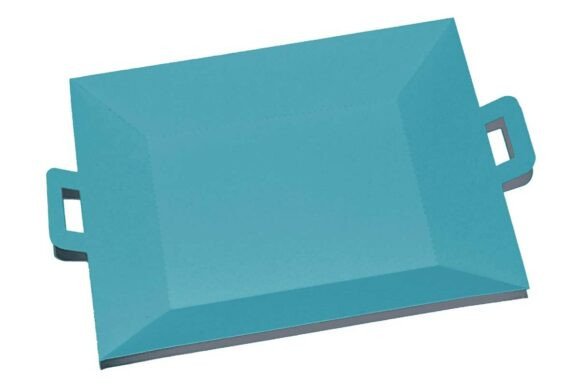
3D Rectangular Favour Decor Paper Tray
The 3D Rectangular Favour Decor Paper Tray represents a specific intersection of digital design and physical craft. At its core, this is a die-cut template designed to create three-dimensional packaging or decorative holders. The product you are looking at is not a finished box; it is a flat, one-piece cut file provided in SVG format. To bring it to life, you must print the design onto card stock, fold along the pre-marked perforated lines, and adhere the corner tabs to the back structure.
This process transforms a simple sheet of paper into a functional, elegant container. While the concept sounds straightforward, the implications vary significantly depending on who is holding the scissors and what they intend to achieve. Whether you are a hobbyist preparing for a wedding, a small business owner scaling up production, or an educator teaching geometry, the value proposition of this tool shifts. Understanding these nuances helps you decide if this project aligns with your current goals, skill level, and resources.
What Is a 3D Rectangular Favour Decor Paper Tray?
Before diving into applications, it is essential to clarify the mechanics. A "favour" typically refers to a small gift given to guests at events like weddings, birthdays, or corporate gatherings. The rectangular tray serves as the vessel for these items—be it candies, jewelry, or small tokens. The "3D" aspect indicates that the final product has depth, volume, and structural integrity, distinguishing it from flat cards or envelopes.
The key feature here is the SVG format. Scalable Vector Graphics allow for precise resizing without losing quality, which is crucial for professional printing. However, the assembly relies heavily on the user’s precision. The design includes perforated lines for folding and glue tabs for structural bonding. This means the success of the project depends less on the software and more on the material choice and manual dexterity during assembly.
Ease of Use vs. Quality: The Material Factor
One of the most critical decisions in this project is selecting the right paper. The instructions explicitly recommend using heavy-weight card stock. This is not merely a suggestion but a structural necessity. If you use standard printer paper, the tray will collapse under its own weight or fail to hold even light items. Conversely, if the paper is too thick, the folds may crack, and the glue tabs may not adhere properly.
- Beginners: Should start with medium-weight card stock (around 200–250 gsm). It is forgiving enough to fold without tearing but sturdy enough to maintain shape. Practice on scrap pieces before committing to the final event materials.
- Professionals: Often prefer higher GSM weights (300+ gsm) for a premium feel. They may also invest in scoring tools to ensure crisp, clean folds, which elevates the perceived value of the favour.
The trade-off is clear: heavier paper looks better but requires more effort to assemble. Thinner paper is faster to fold but risks looking flimsy. Finding the balance is part of the creative process.
Why Different Audiences Care
The utility of the 3D Rectangular Favour Decor Paper Tray extends across various sectors. Here is how different groups evaluate its worth.
Hobbyists and Crafters
For hobbyists, this project is about creativity and personalization. The ability to download an SVG file and print it at home offers immediate gratification. You can experiment with different colors, patterns, and textures. Perhaps you want a rustic kraft paper look for a barn wedding or metallic foil for a gala. The flexibility of the SVG format allows you to tweak dimensions slightly if needed, though the structural integrity relies on the original design ratios. The learning value here is high—you gain skills in vector file handling, printing calibration, and paper engineering.
Small Business Owners and Entrepreneurs
For those selling handmade goods, presentation is everything. A well-crafted favour tray can enhance the unboxing experience of a customer’s order. Imagine sending a hand-poured candle or a piece of jewelry inside a custom-folded tray. It signals attention to detail and care. From a commercial perspective, the cost per unit is low if done in bulk, but the time investment in assembly can be high. Some entrepreneurs might use this as a unique selling point, marketing the "hand-assembled" nature of their products.
Educators and Parents
In an educational setting, this project serves as an excellent tool for teaching spatial reasoning and geometry. Students learn about nets, surfaces, and 3D shapes. The act of folding along perforated lines reinforces fine motor skills. For parents, it is a productive screen-free activity that results in a tangible object. It bridges the gap between digital files (SVG) and physical reality, making abstract concepts concrete.
Event Planners and Marketers
Consistency is key for large-scale events. Using a standardized SVG design ensures that every favour tray looks identical, contributing to a cohesive brand aesthetic. For marketers, these trays can double as mini-advertisements if printed with logos or QR codes. The durability of heavy-weight card stock ensures the branding survives the event. However, the speed of assembly becomes a bottleneck here. Professional planners often delegate the folding and gluing to volunteers or staff, requiring clear instructions and practice runs.
Practical Examples and Use Cases
To visualize the potential, consider these scenarios:
- A Wedding Reception: Instead of loose candies in a bowl, each table has a stack of elegant 3D trays filled with personalized mints. The rectangular shape allows them to sit neatly on place settings, adding a touch of sophistication without clutter.
- Corporate Gift Bags: A tech startup includes a USB drive in a sleek, minimalist black card stock tray. The 3D structure protects the device, while the professional finish reflects the company’s brand identity.
- Birthday Party Favors: A child’s birthday party features bright, patterned trays filled with small toys. The ease of assembly allows parents to prepare hundreds quickly, ensuring no guest leaves empty-handed.
Evaluating Your Fit
Deciding whether to use the 3D Rectangular Favour Decor Paper Tray depends on your priorities. Ask yourself the following questions:
- Do you have access to good printing equipment? Home printers may struggle with heavy card stock. If so, do you have a local print shop willing to handle it?
- How much time do you have? Folding and gluing dozens or hundreds of trays is labor-intensive. If you are short on time, consider hiring help or opting for pre-made alternatives.
- What is your budget? While the digital file is a one-time purchase, the cost of high-quality paper and ink adds up. Calculate the cost per unit to ensure it fits your margin.
- Is aesthetics a priority? If you need perfect, uniform results, this method works well. If you are okay with slight variations, it offers a charming, handmade appeal.
The beauty of this project lies in its adaptability. It is not just a box; it is a canvas for your ideas. By understanding the materials, the assembly process, and the audience’s needs, you can transform a simple SVG file into a memorable physical experience. Whether you are creating a single prototype or mass-producing for a festival, the 3D Rectangular Favour Decor Paper Tray offers a blend of simplicity and elegance that resonates with modern design sensibilities.
Remember, the goal is not just to contain an item, but to enhance the moment. The tactile experience of unfolding a sturdy, well-designed tray creates a connection between the giver and the receiver. It turns a transaction into an interaction. So, choose your paper wisely, fold with care, and let the design speak for itself.